Shopify vs WordPress: Which Platform Is Better for Your Business?
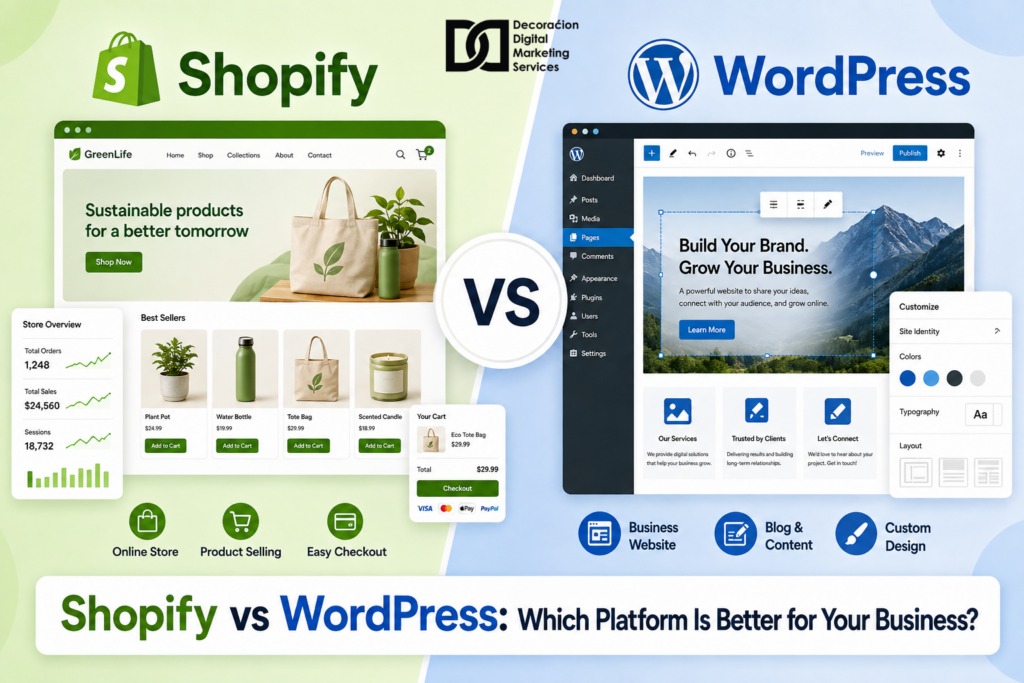
Choosing where to build your online store is an important decision. The platform you pick affects your launching, growth and your control over your brand. Two names dominate this conversation: Shopify and WordPress. Both power millions of websites worldwide. Both have passionate users. But they approach the task very differently. You need to understand the difference between Shopify vs WordPress to make the right choice.
What Each Platform Actually Offers
Shopify is a dedicated ecommerce service. You pay a monthly subscription. In return, you get hosting, security, payment processing and store management tools in one package. Everything is built to sell products. You get convenience and speed.
WordPress is a content management system that powers all kinds of websites. Blogs, business sites, portfolios and yes, online stores through the Woocommerce plugin. It is open-source. Even though it is free to use, you need separate hosting. You have to manage updates and security all by yourself. You do get flexibility but it comes with responsibility.
Ease of Getting Started
Shopify is made for quick launches. You just have to sign up, pick a theme, add products and start selling. The dashboard is clean and focused. Support is available around the clock. It does not require technical skills. This attracts the entrepreneurs who want to focus on products and marketing rather than technology.
WordPress has a different approach. You must install the software, choose hosting, select a theme and add plugins for the features you need. The dashboard provides more options that can feel overwhelming. But it can feel easy if you already know WordPress or have access to help. The trade off is greater long-term control.
Flexibility and Customization
WordPress wins on flexibility. Thousands of themes exist. Tens of thousands of plugins extend functionality. You can modify any aspect of your site. You can build custom features. You can integrate with almost any service. This freedom suits businesses with unique needs or plans.
Shopify provides customization but within its ecosystem. Themes look professional. Apps add functionality. But you work within Shopify’s framework. If you want to make deep changes, it requires knowledge of coding language. For many businesses, this structure is helpful.
Costs to Consider
You have to pay monthly fees on Shopify. Transaction fees apply unless you use their payment system. Apps often add monthly costs. These expenses are predictable and ongoing.
WordPress itself is free. Hosting costs range from budget to premium depending on your traffic and needs. Themes and plugins change from free to expensive. Some are one-time purchases while others renew annually. The total costs depend on your choices.
Which Platform Suits Your Business
The right choice depends on your situation more than any universal ranking.
Here are questions to guide your decision:
Do you need to launch quickly without technical help? Then go for Shopify.
Do you prefer maximum control over features and design? WordPress offers more freedom.
Do you want predictable monthly costs? Shopify makes budgeting simple.
Do you have technical skills or access to developers? WordPress rewards that investment.
Making the Smart Choice
There is no single winner in Shopify vs WordPress. There is only the best fit for your specific business, your skills, your timeline and your growth plans. Both platforms serve successful companies. Both have real strengths.
Ready to build? Connect with DDMS today. We help you in picking the right platform. We create stores that sell. We manage design, development and growth. Let DDMS turn your vision into success.